Robert Lipinski

University of Oxford | World Bank

Exploring History, Political Economy, and Bureaucracy

I'm a final year PhD student of Politics at the University of Oxford and a consultant at the World Bank' Institutions Capacity and Effectiveness unit.

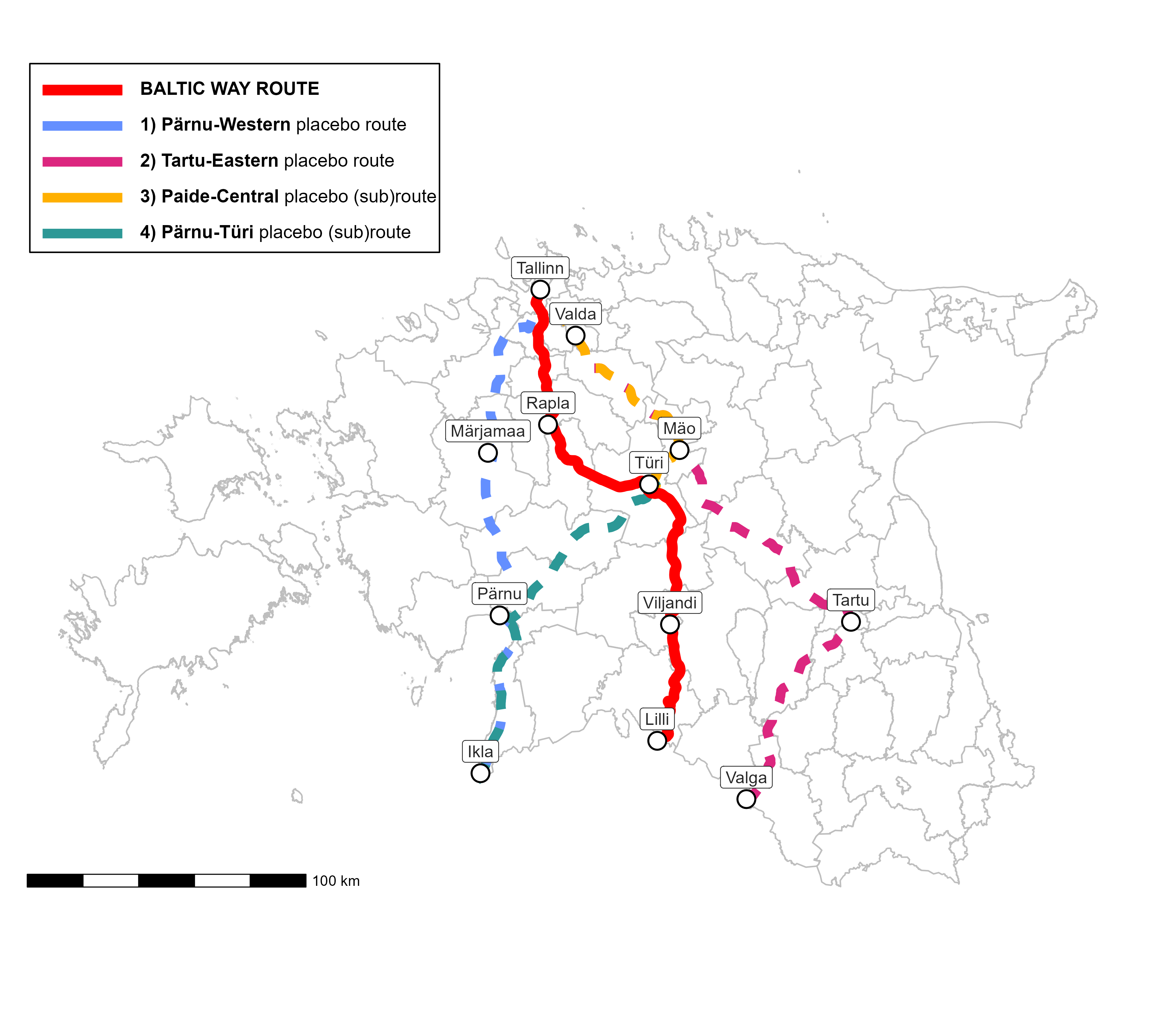
My thesis asks how much does past shape the present society? The crumbs of an answer to this question lie in many corners of the globe and across the ages. I explore political legacies of history at three stages (1) living memory (Baltic Way demonstration, Finnish TV in Estonia) (2) collective memory (British history of slave trading (3) institutional legacies (border changes, remnants of the partitions of Poland 1772-1918).

In the World Bank I focus on helping the ublic institutions get more efficient and responsive to citizens' needs. Currently we work on developing an AI-assisted set of Public Institutions' Capacity indicators and expanding the Global Survey of Public Servants (GSPS) . I've also helped to create regional development indicators in Estonia and Latvia and co-authored chapters for "The Government Analytics Handbook" (2023). I've also used my expertise to contribute to the payroll analytics project in Chile, Ecuador, and Peru, under the auspices of the Inter-American Development Bank.

Research


Chain Reaction
The Political Legacies of Exogenous Protest Exposure through ’Linear Mobilisation’ in the Baltic States.

Thesis paper (draft)
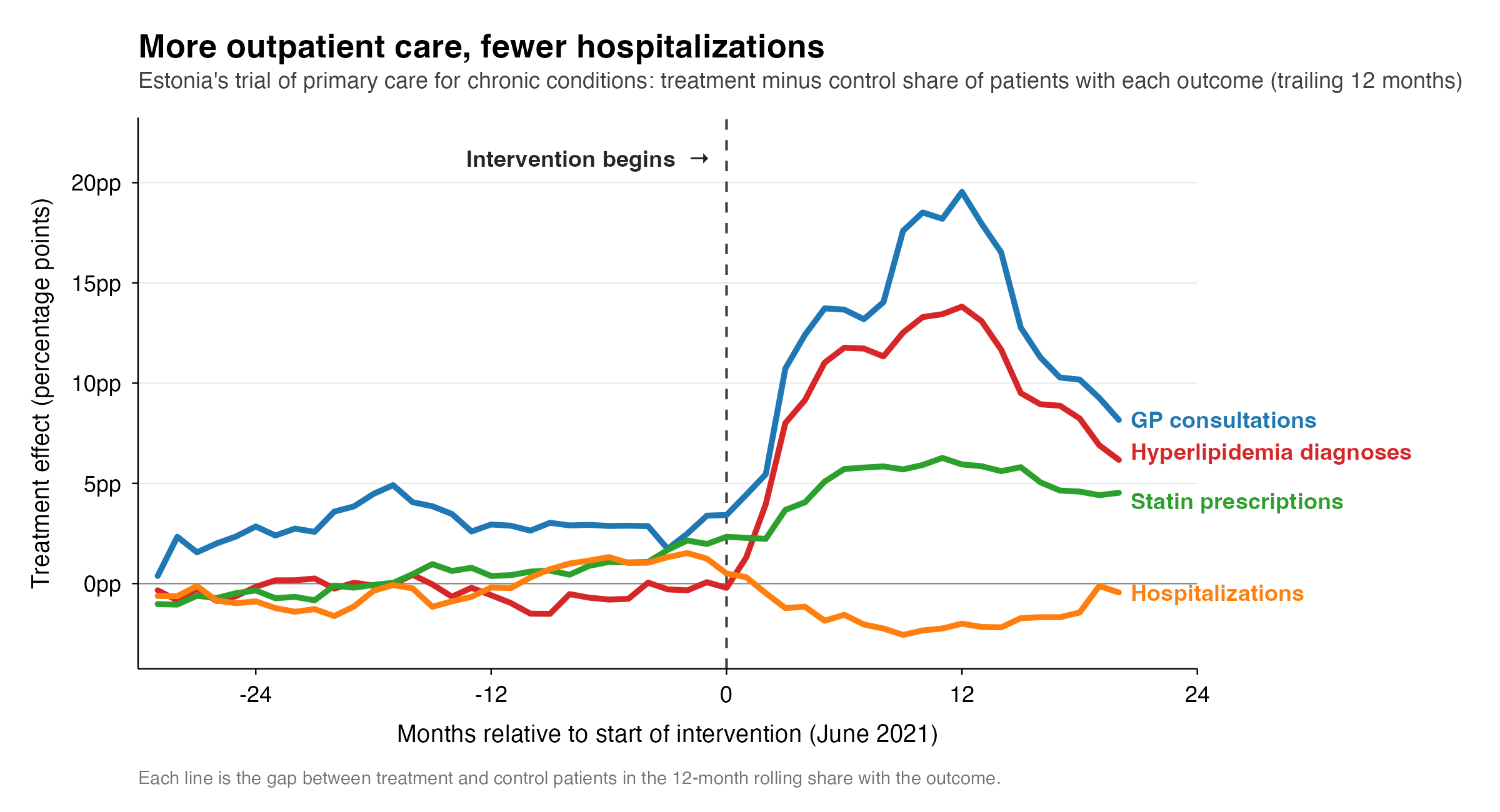
Motivating Improved Healthcare Using Holistic
Patient Contracts
(Estonian RCT)

2026
Journal of Public Economics [accepted]

Co-authors: Croke K., Daniels B., Rogger D
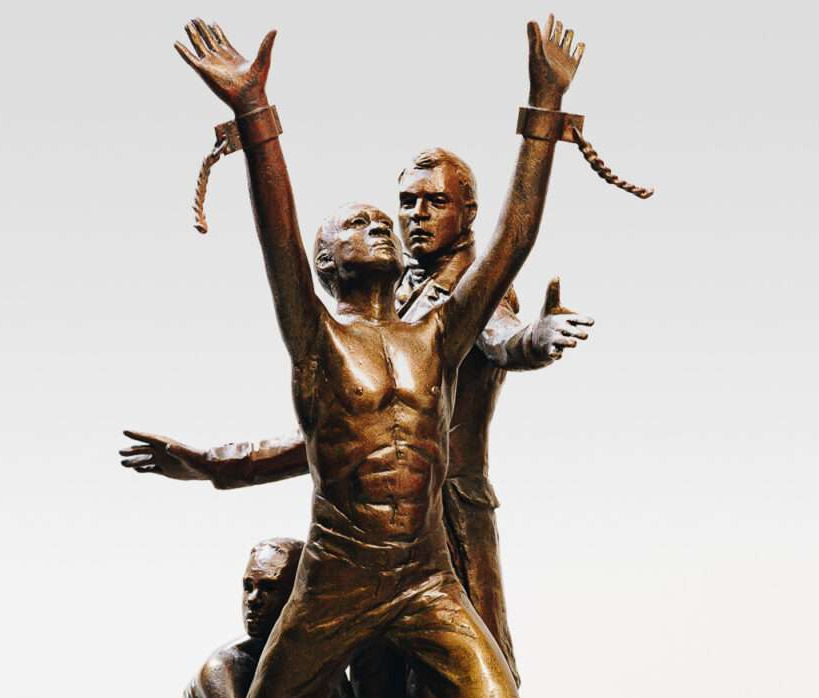
Enslaving Memory
Divergent framing of historical events and the persistence modern-day racial attitudes in Britain

Thesis paper (draft)
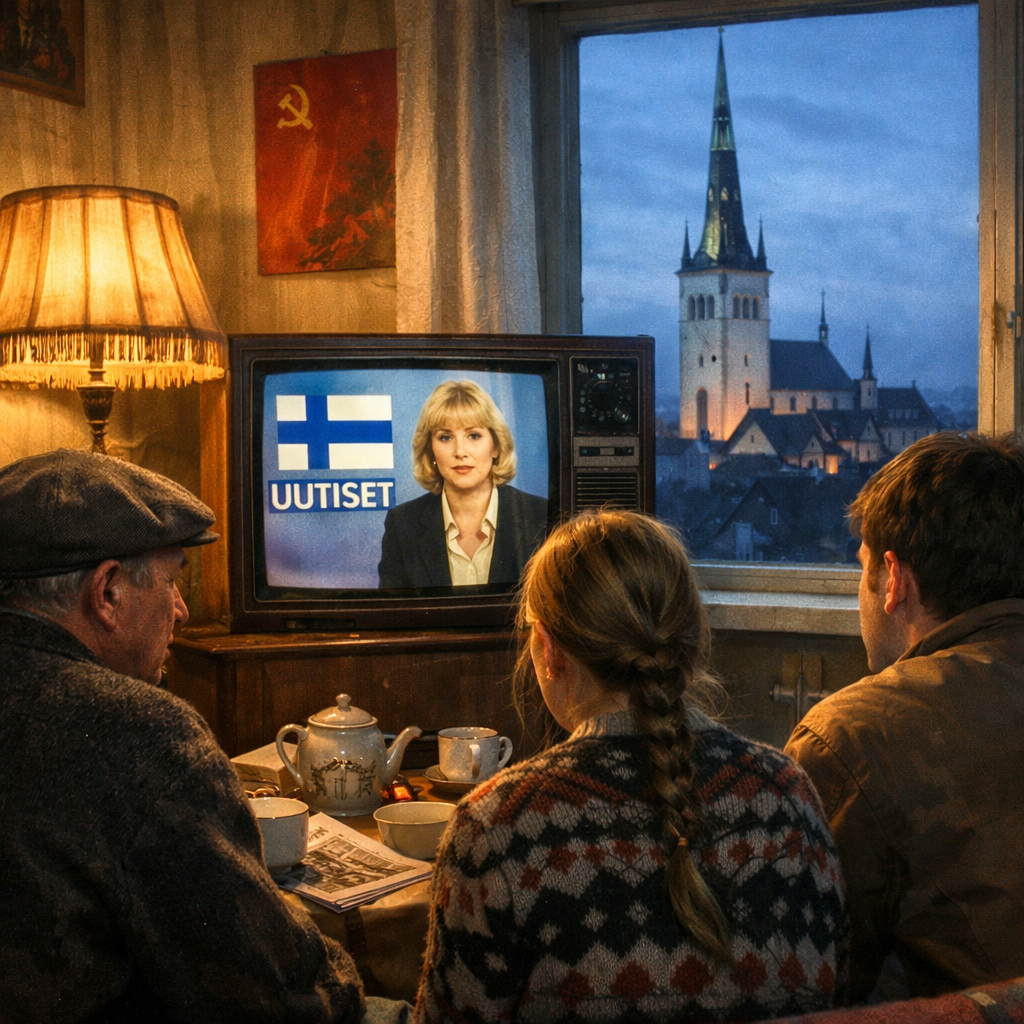
Over the Finnish Line

Understanding the Role of Foreign Media in Political Liberalisation

Thesis paper (draft)

Creating Public Payroll Indicators
A Methodological Guide

Inter-American Development Bank publication
Co-authors: Schuster, C. and Bautista, S.N.
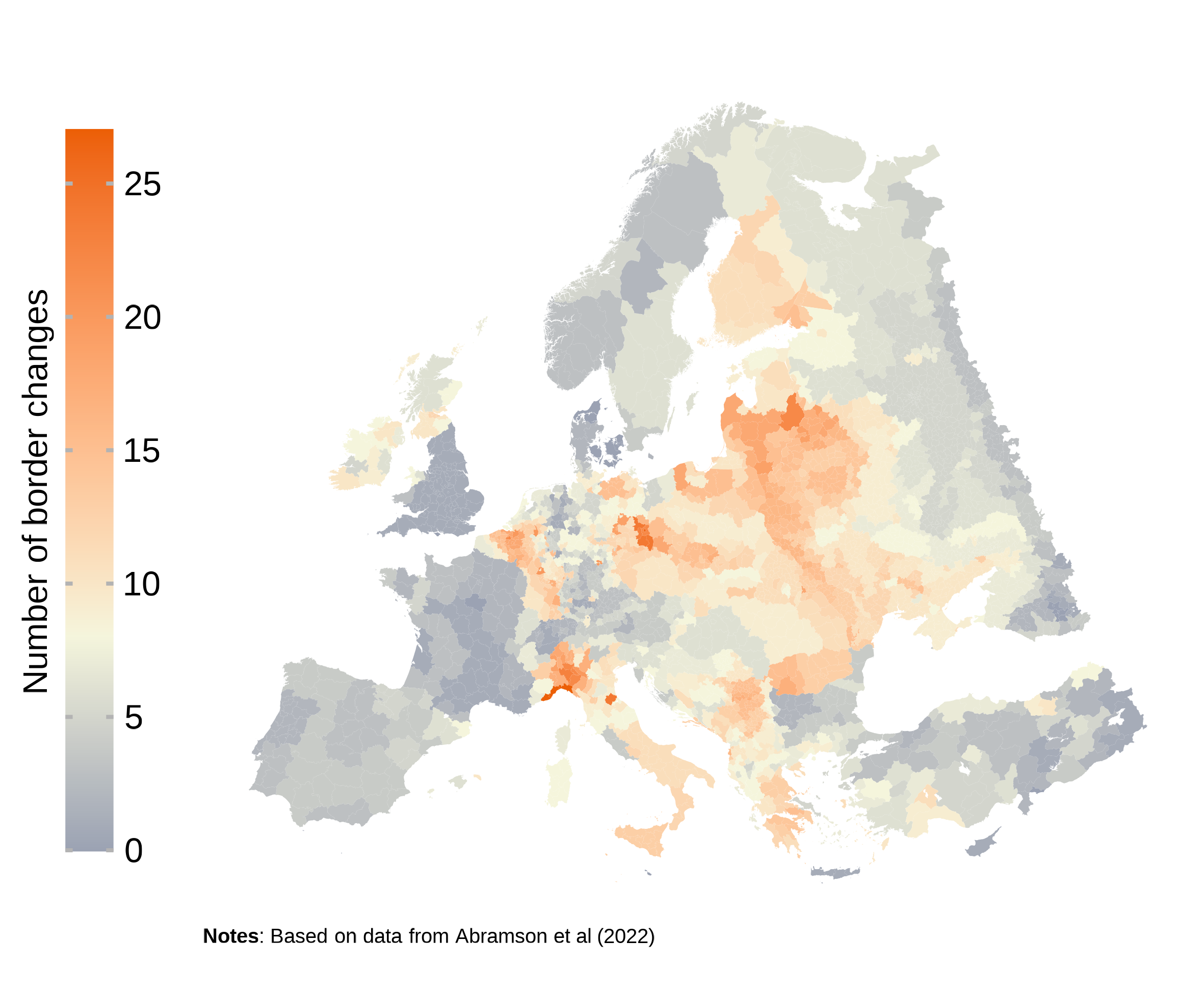
Historical Palimpsest
Frequency of Border Changes and Long-Run Economic and Political Development of Europe

Thesis paper (draft)
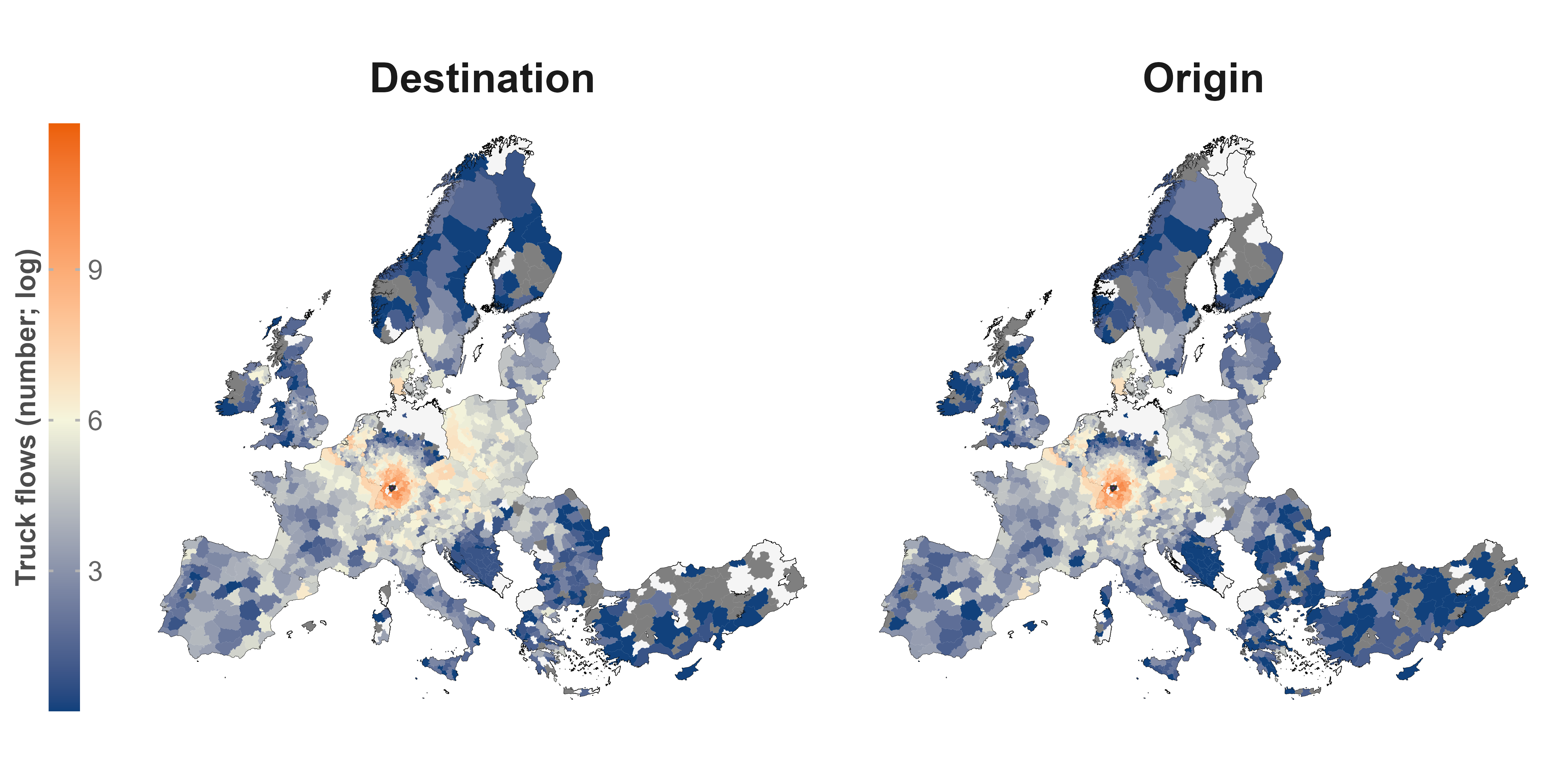
Homokrateia

Historical Ties and the Contemporary Connections among European Regions

Thesis paper (draft)
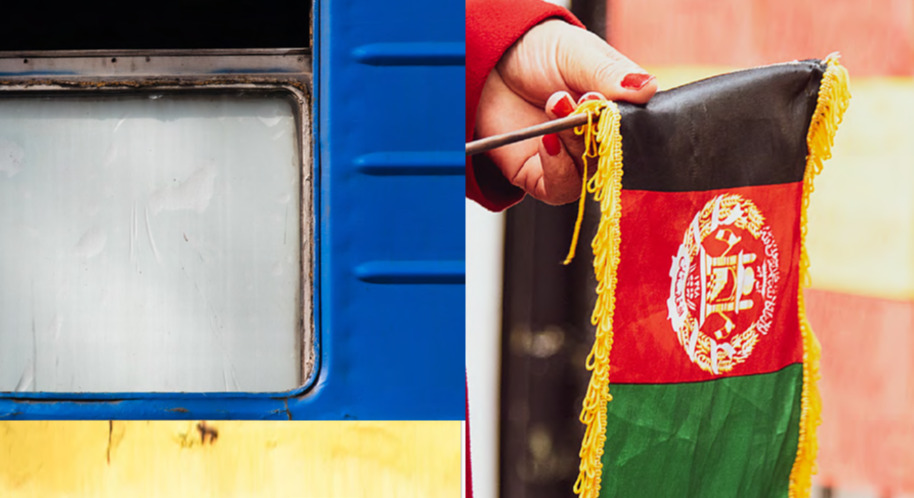
A Tale of Two Contexts: The Ukrainian and Afghan Refugee Crises in Canada and the UK

2023
Report for University of Oxford's Centre on Migration, Policy and Society (COMPAS)

Co-authors: Bejan R., Mallet-Garcia M., Do C., and Aviles, V
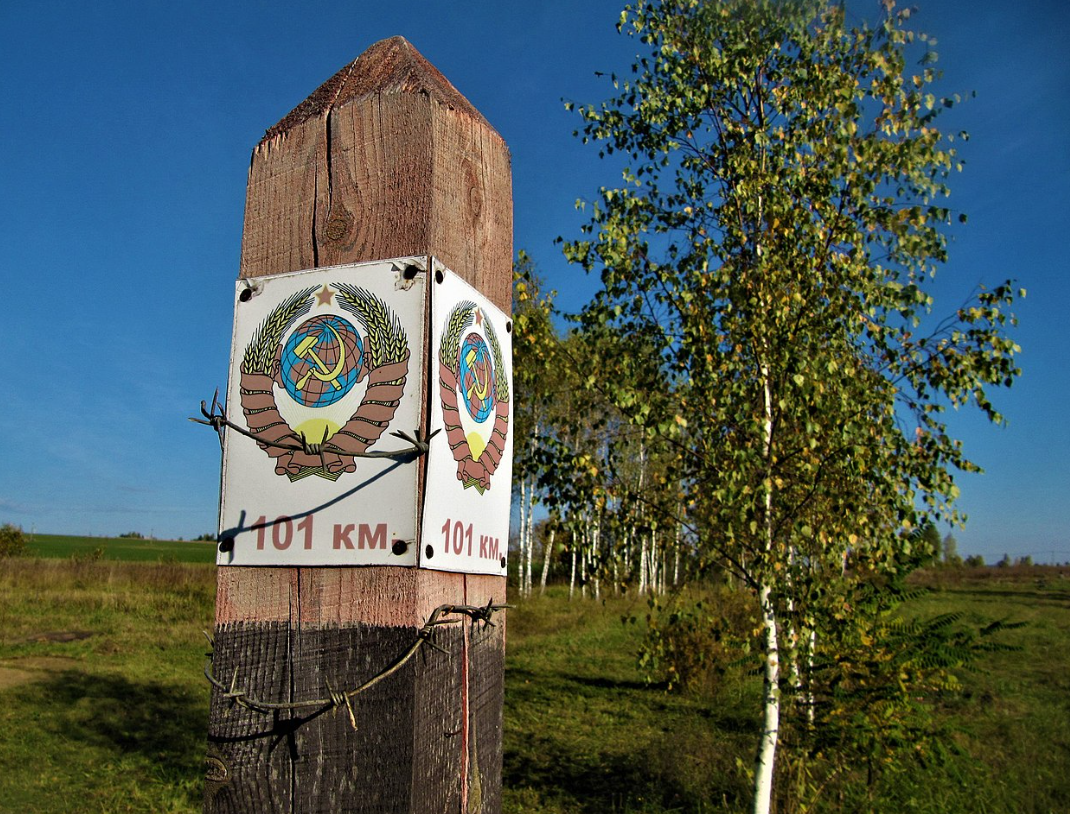
Resettlement 101
Political and Economic Legacies of Soviet 'Kilometre 101' Policy

Thesis paper (draft)

Determining Sample Sizes: How Many Public Officials Should Be Surveyed?

2023
The Government Analytics Handbook (Chapter 20)

Co-authors: Rogger D., Schuster C., and Wittels A.

Designing Survey Questionnaires: Which Survey Measures Vary, and for Whom?

2023
The Government Analytics Handbook (Chapter 21)

Co-authors: Rogger D., Schuster C., and Wittels A.

Designing Survey Questionnaires: To What Types of Survey Questions Do Public Servants
Not Respond?

2023
The Government Analytics Handbook (Chapter 22)

Co-authors: Rogger D., and Schuster C.

Interpreting Survey Findings: Can Survey Results Be Compared across Organizations
and Countries?

2023
The Government Analytics Handbook (Chapter 24)

Co-authors: Meyer-Sahling J-H., Mikkelsen K.S., and Schuster C.

Global Survey of Public Servants

2023
Ongoing project

Co-authors: Bersch, K., Fukuyama F., Hasnain, Z., Kay, K., Meyer-Sahlinh J., Mikkelsen, K., Mistree, D., Rogger, D., Schuster, C., Khurshid, A., Sacco, F.
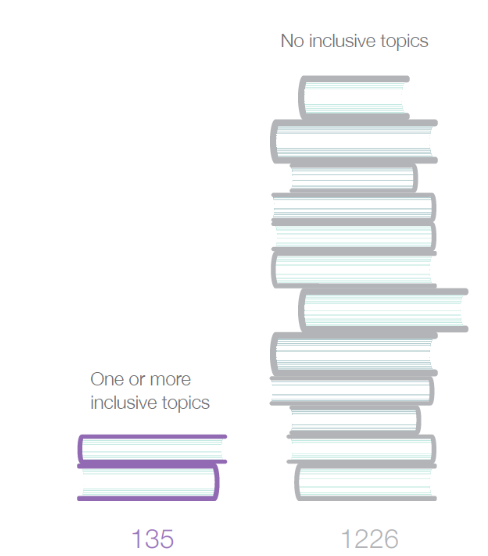
Diversity or Decolonization? Searching for the Tools to Dismantle the ‘Master’s House’

2021
London Review of Education 19(1), p 1-18

Co-authors: Arshad M., Dada R., Elliott C., Kalinowska I. Khan M., Vassanth V., Bhandalm J., de
Quinto Schneider M., Georgis, I., and Shilston F.
Visualizations

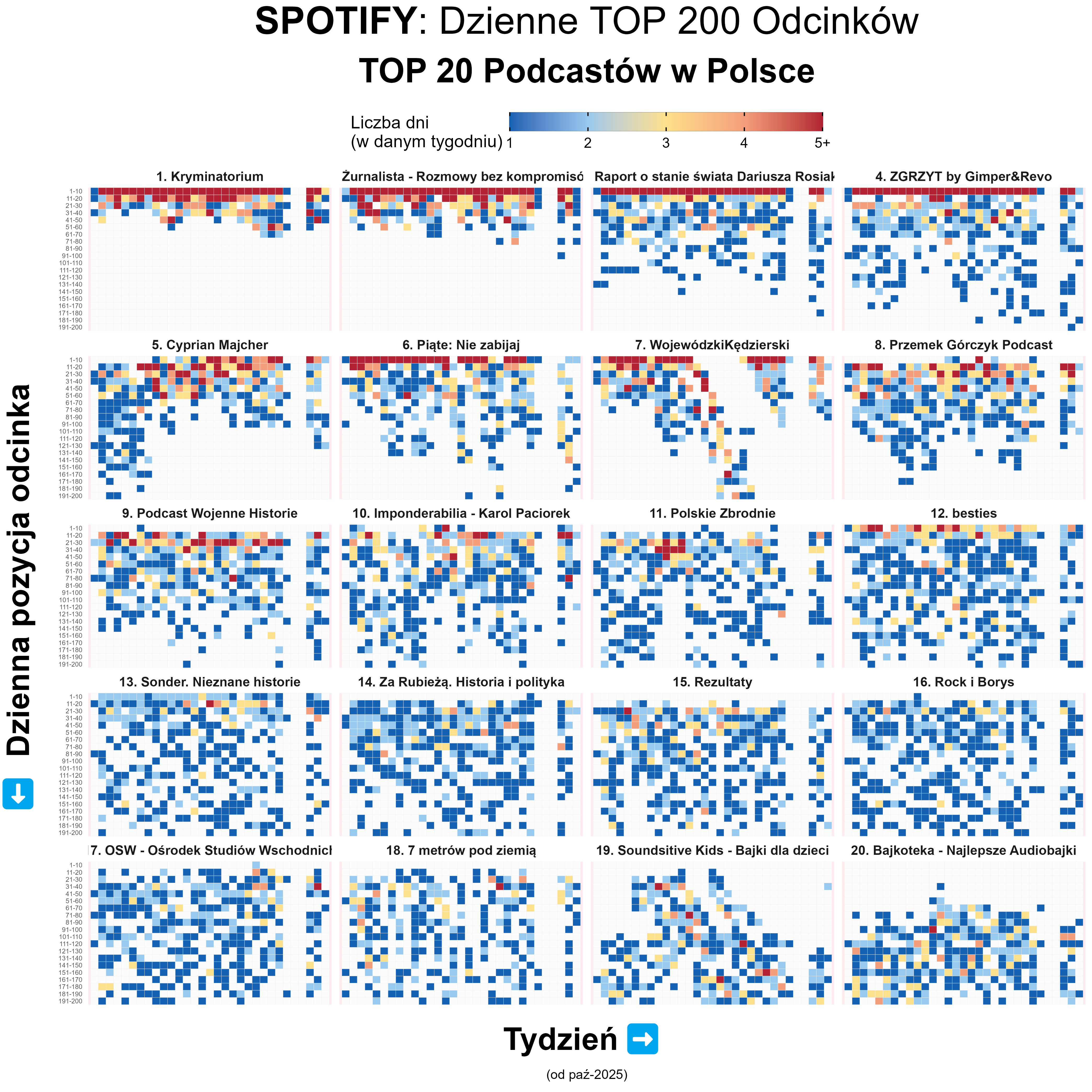
Spotify - what Poland listends to?

The visualizations shows popularity of episodes of the top 20 podcasts in Poland, on a weekly basis. Y-axis represents ranking of each podcast among the top daily 200 episodes and x-axis represents weeks, starting from Oct-2025. The more days per week episodes of a given podcast spend on each place in the ranking, the warmer the color gets

> A few very top podcasts have all their episodes in the first 20/30 daily episodes every single week. 
> Other top podcasts fare less consistently
> Many episodes are high in the ranking for a single day only (likely the release day)


Coverage: Top 200 episodes each day, from 2025-10-11, to 2026-04-19 (with missing dates between 2026-03-28 - 2026-04-19)

Data: Kaggle


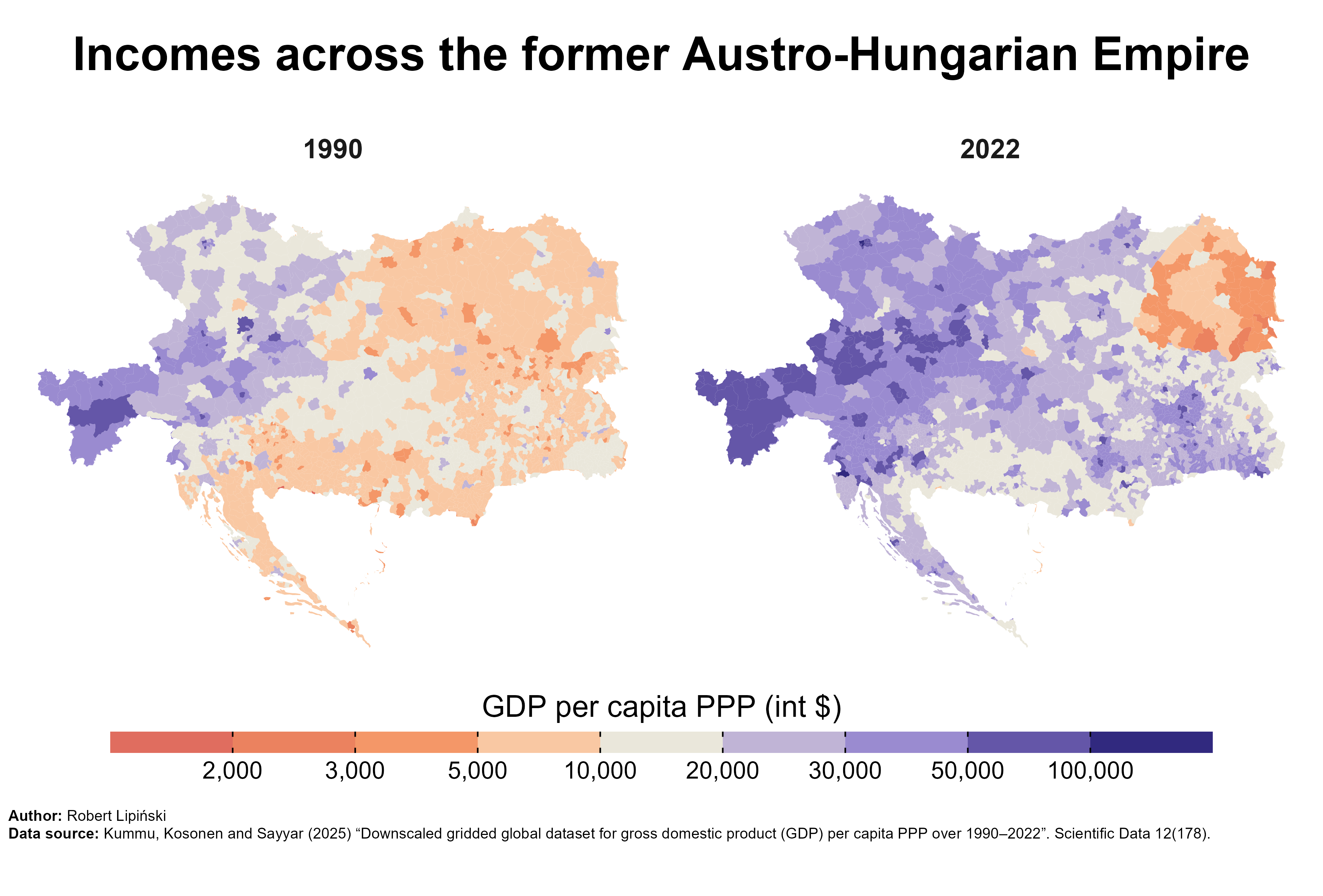
Habsburg Ghosts - how?

The distribution of GDP across the former territories of the Austro-Hungary.

> west-east income largely disappeared after the fall of the Iron Curtain
> former Habsburg territories in the modern-day Ukraine are still faring somewhat worse than the rest 


Data: Kummu, Kosonen and Sayyar (2025) "Downscaled gridded global dataset for gross domestic product (GDP) per capita PPP over 1990–2022". Scientific Data 12(178).


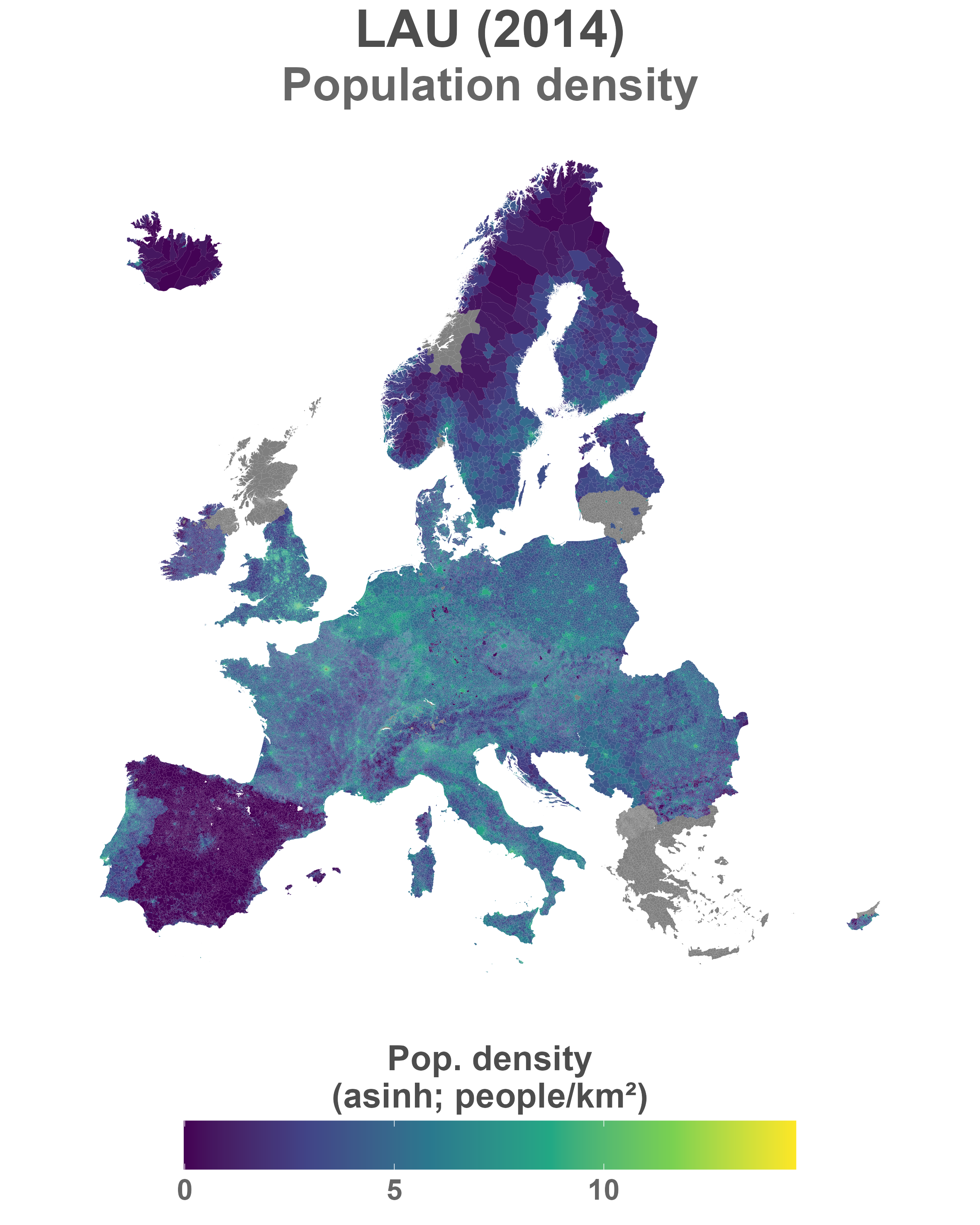
Statistics - where information and art meet

Turns out simple file download and 3 lines of code to visualize population density at local level can reveal so much about modern Europe..

> Spain is really, really empty
> Frenchmen love to live alongside rivers
> Europe's 'Blue Banana' region is also one of the most densely populated areas
> Mountain ranges can be as easily seen with population map as with elevation data


Coverage: Local Administrative Units (LAU) in Europe

Data: GISCO


What if Russia Came for you?

The plot shows in red which territories would be lost by every European nation if it suffered the same territorial losses as Ukraine did at the hands of Russia as of February 2024 (20% of national territory). The areas coloured are the ones that are the closest to the eastern-most neighboring country and collectively have a landmass that just crosses the 20% of total national territory threshold. NUTS-3 units were used as reference, apart from the countries outside the EU or where there are <40 than NUTS-3 units. In those instances local administrative units were used

Coverage: 25,256 local units across 33 countries

Data: Eurostat


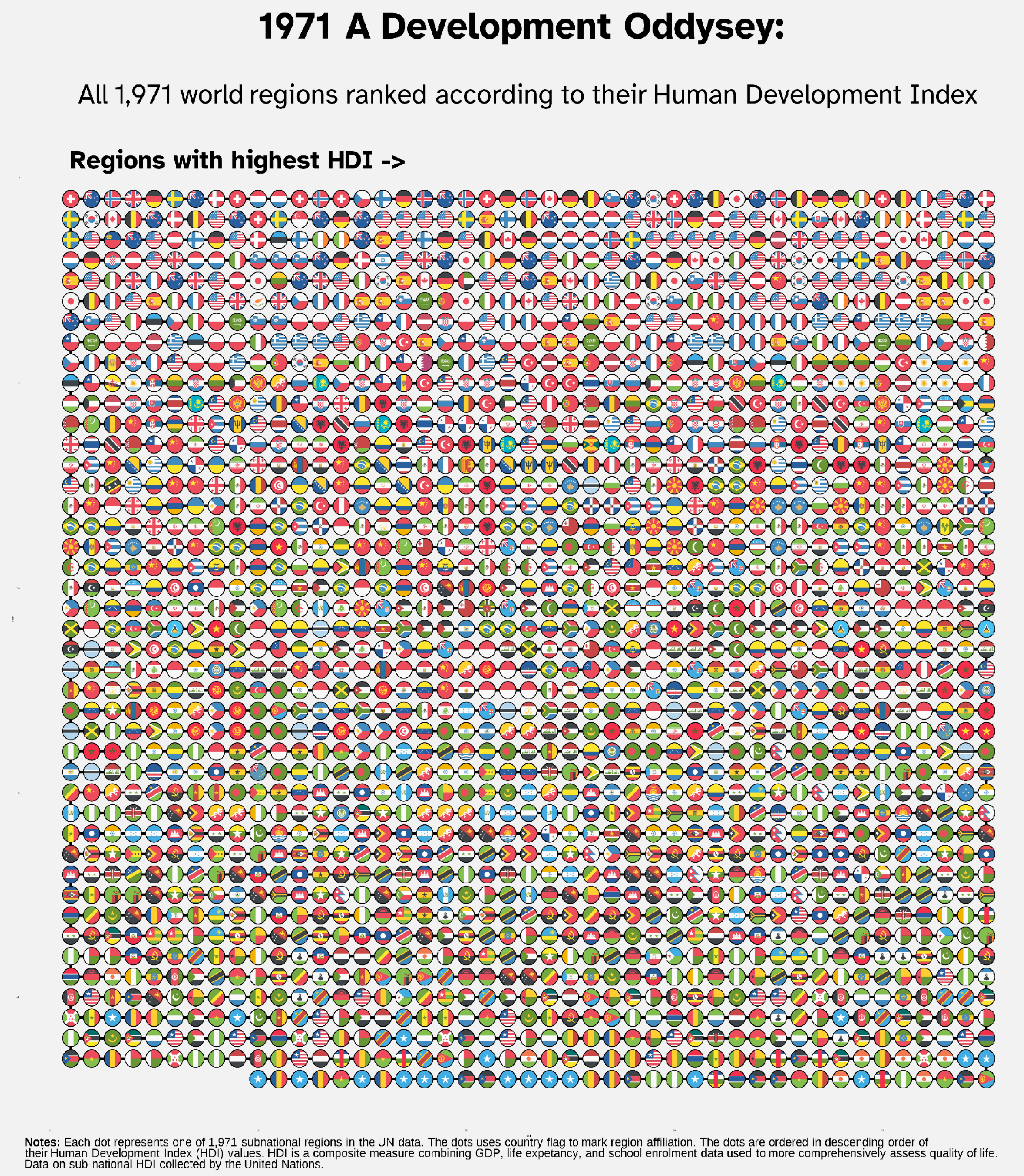
1971 A Development Oddysey

Development is often compared for whole countries

But Human Development Index (HDI) is also calculated for 1,971 subnational units!

Zurich 🇨🇭 opens the ranking (at 0.989) at Middle Juba 🇸🇴 closes it (0.232)

Sadly, only 20/592 African regions outrank the last EU region in 🇧🇬

Measure: Human Development Index (HDI), ranging from 0 (least developed) to 1 (most developed)

Coverage: 1,971 sub-national regions of the world

Data: Global Data Lab


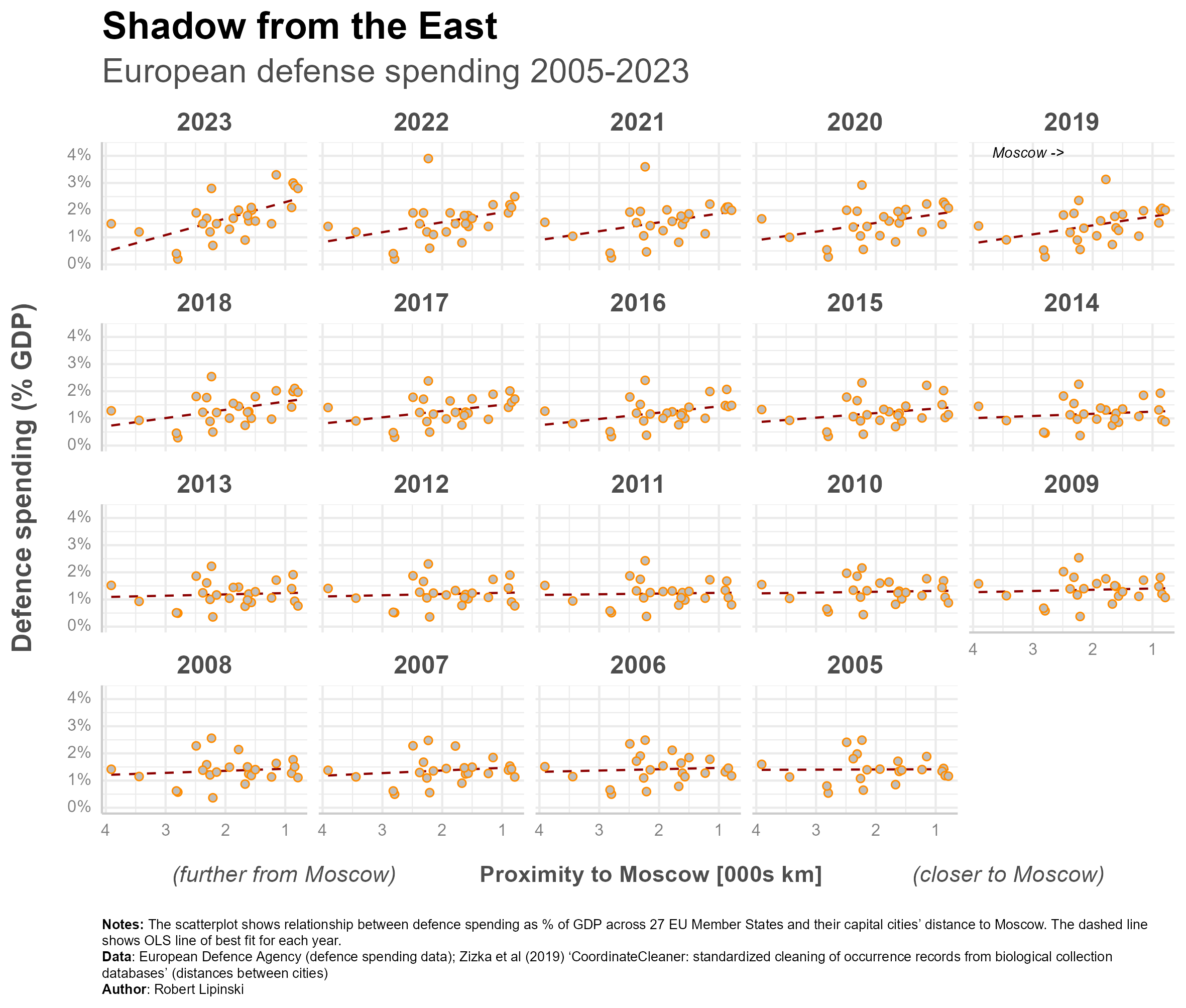
Shadow from the East

In 2023 countries closer to Russia spend noticeably more of their GDP on defence. Contrary to some sceptics view this isn't driven by some irrational fear or prejudice against Moscow. The correlation between defence spending and distance to Moscow only starts being visibly correlated since 2014 - the year Ukraine was first attacked. The rising defence spending in countries close to Russia is therefore a logical reaction to the ever more real military threat

Measure: Defence spending across EU countries (% GDP) vs proximity to Moscow (000s km) by year

Coverage: 27 EU member states (given data availability)

Data: European Defence Agency; Zizka et al. (2019) "Coordinate Cleaner: standardized cleaning of  occurrence records from biological collection databases"

Idea sparked by The Economist (09/01/2025) article "Europe could be torn apart by new divisions", which compared those two measures for 2023 alone


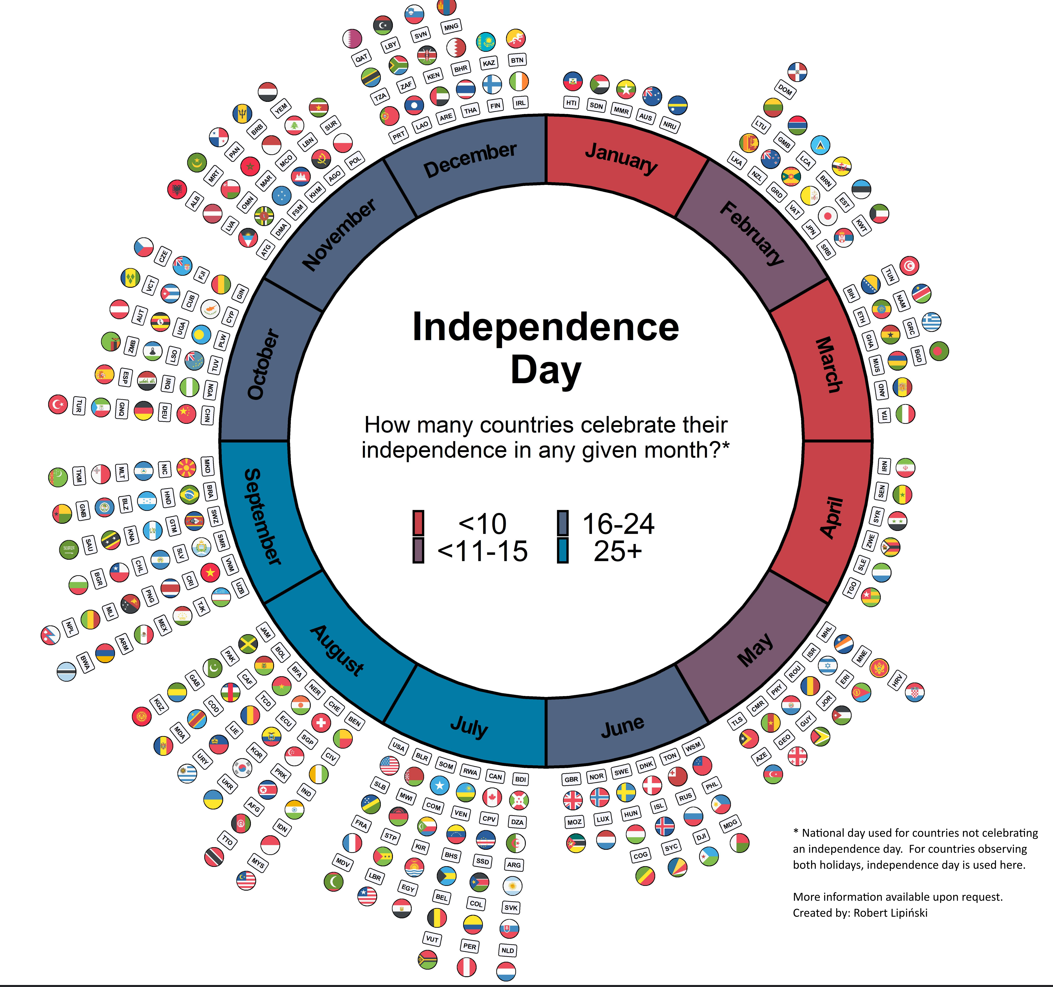
Independence days

When do countries celebrate their independence? When put on a clock-like calendar it turns out that most countries do so in the 2nd part of the year, most often in July, August and September. In turn, very few countries commemorate their freedom in months of January and April. And when do you celebrate your independence?

Measure: Number of national independence day in a month

Coverage: 193 UN member states

Data: Wikipedia (supported by national sources if needed

Here you can learn more about American 4th of July - some lesser known traditions

And here to learn more about independence days in some less talked-about countries


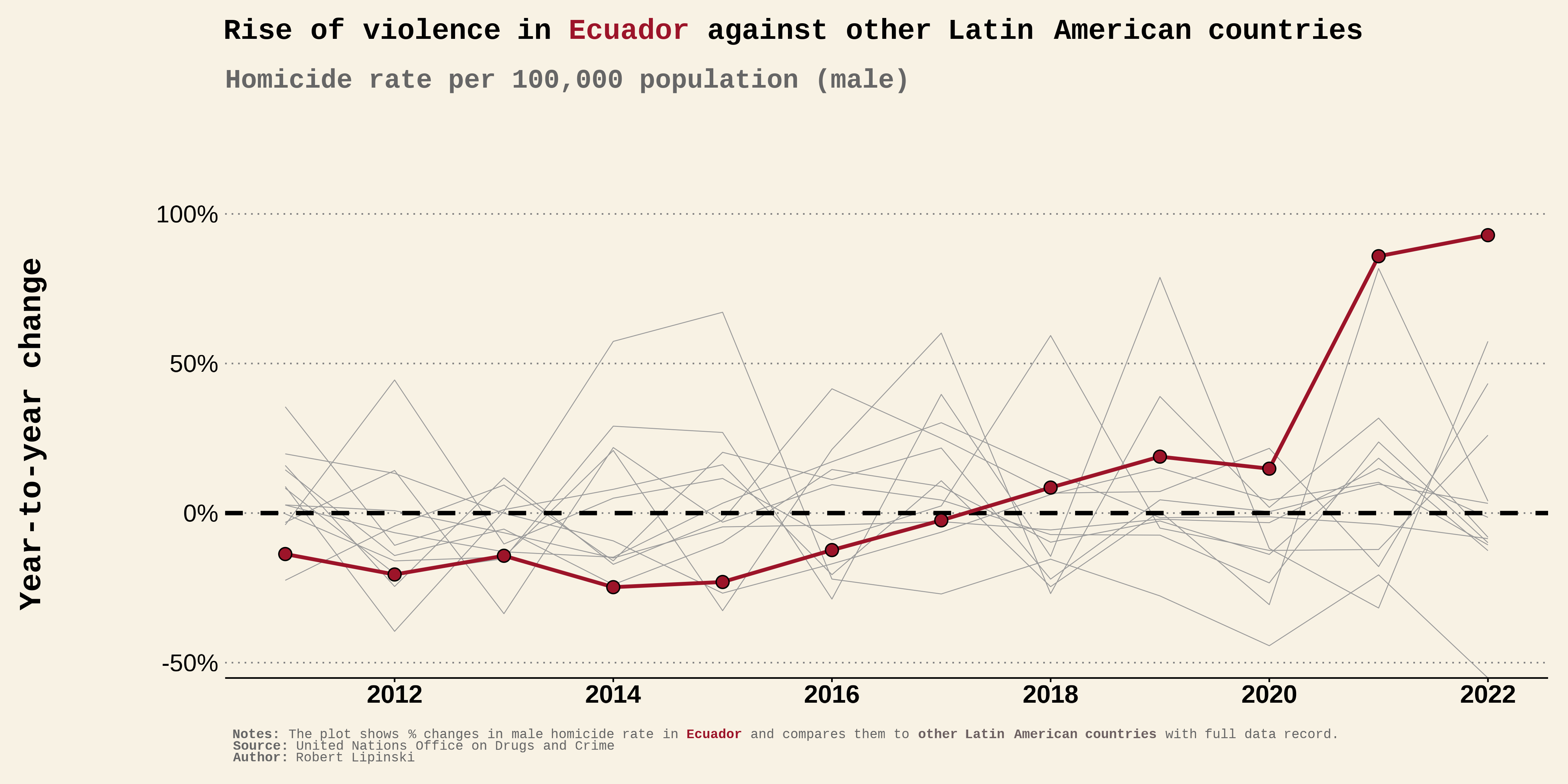
The violence suffocating Ecuador

In recent years Ecuador has been in global news headlines mostly for 'wrong' reasons, in particular the spike in violence. The plot documents the relative size of that bloody trend. The apparent simplicity of those numbers conceals thousands of personal tragedies and destroyed lives...

Measure: Year-to-year change in homicide rate per 100,000 male population

Coverage: Latin American countries

Data: United Nations Office of Drug and Crime

You can learn some more about the recent violence in Ecuador here


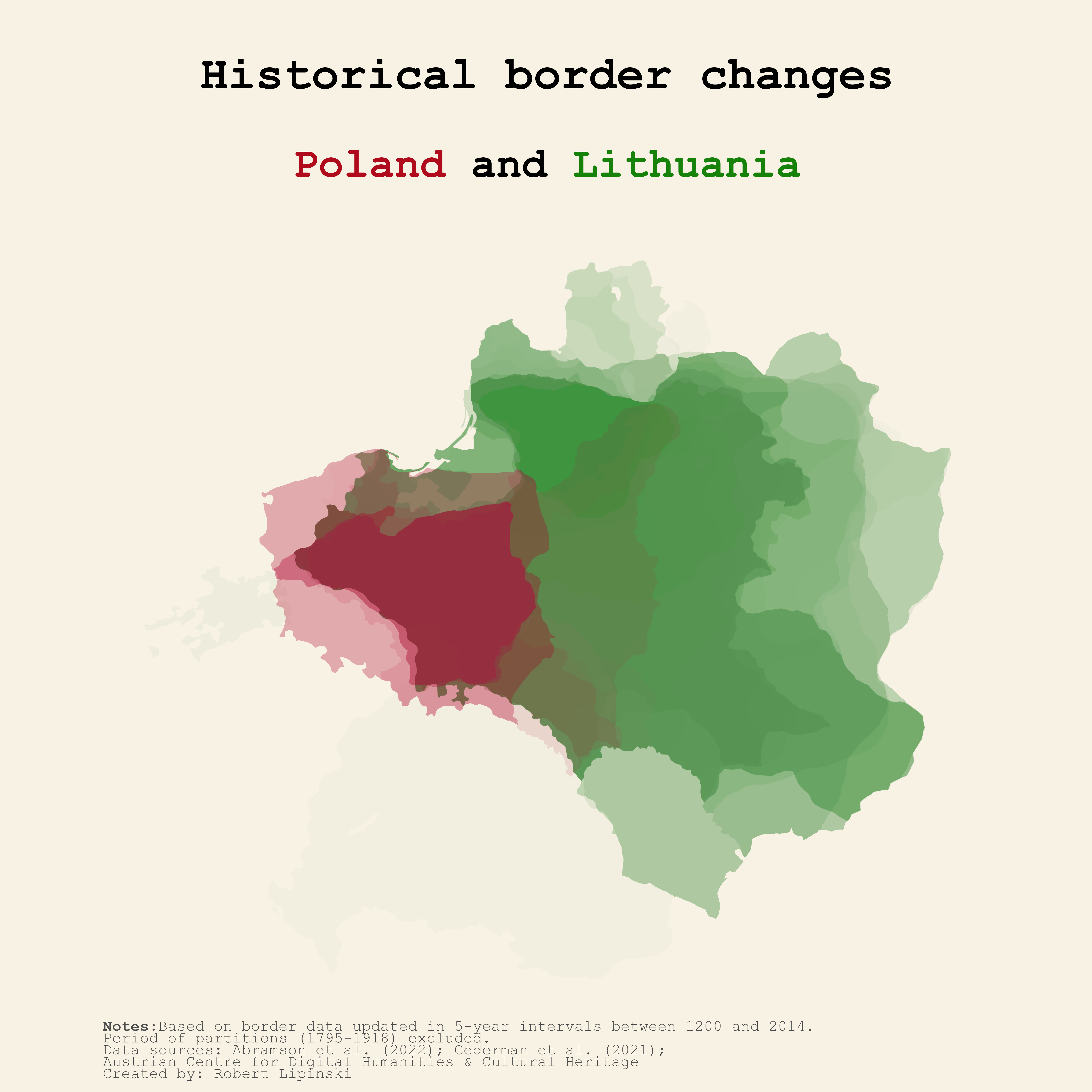
Poland and Lithuania across history

Those two countries formed a union for over 4 centuries and remain close allies as part of the EU and NATO. This map celebrates this bilateral relationship by plotting the territorial changes for both countries across the last 800 years (in 5 year intervals)


Data: Abramson et al. (2022); Cederman et al. (2021); Austrian Centre for Digital Humanities & Cultural Heritage


Multiple illuminating books about the Polish-Lithuanian Commonwealth can be accessed in English, including "The Oxford History of Poland-Lithuania" or (more Poland-centred) book by Norman Davies "God's Playground"


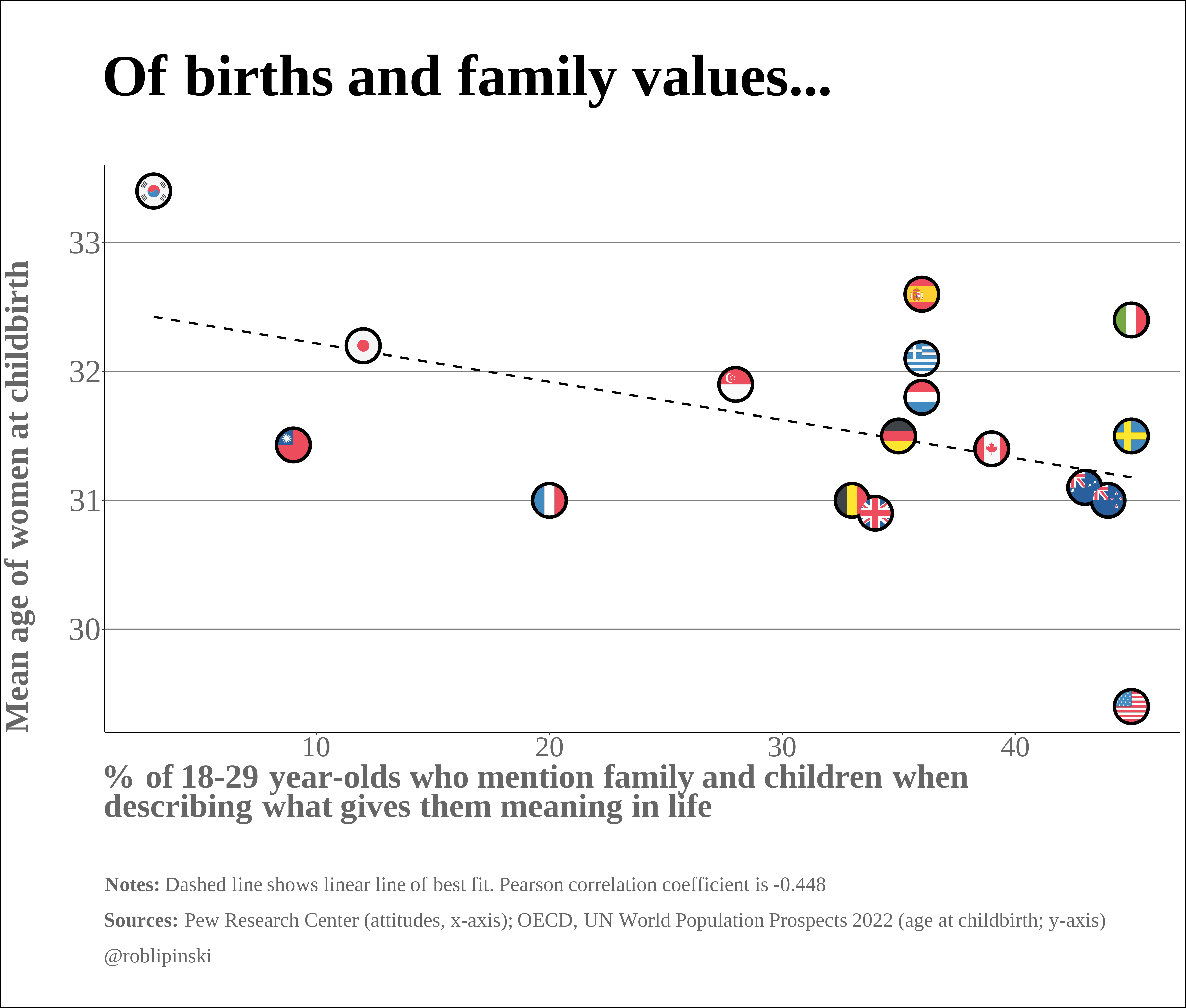
Of birth and family values...

Those two countries formed a union for over 4 centuries and remain close allies as part of the EU and NATO. This map celebrates this bilateral relationship by plotting the territorial changes for both countries across the last 800 years (in 5 year intervals)

Measures: Mean age of women at childbirth; % of 18-29 year-olds who mention family and children when describing what gives them meaning in life

Coverage: 17 OECD countries

Data: Pew Research Center, OECD, UN World Population Prospects 2022


We don't need no education (terms and conditions apply)

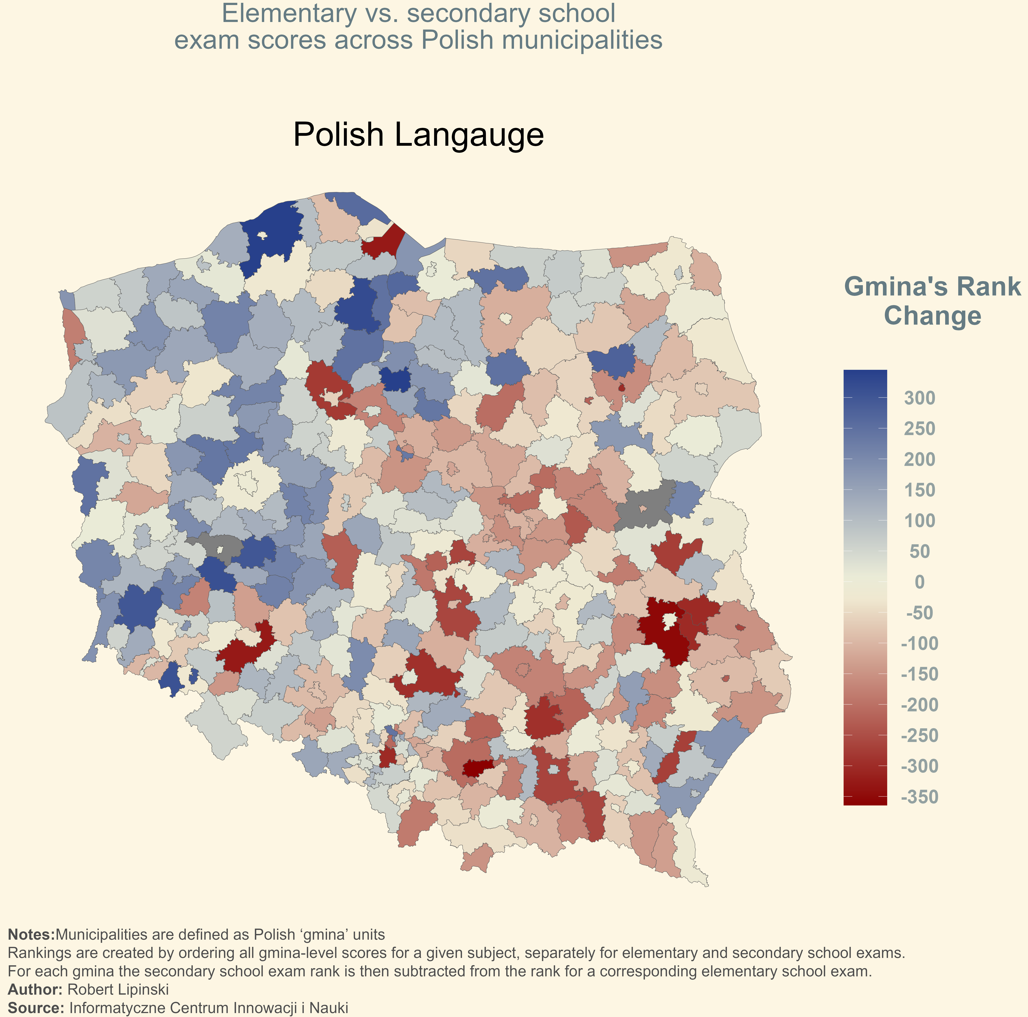
Standardized national test allow one to measure the education standing of different localities across a country. In case of Poland, when secondary and primary school rankings are compared across gminas (3-tier administrative division) some interesting patterns emerge. For one, secondary education in suburbs of large cities (Warsaw, Cracow, Łódź, Lublin) seems to suffer a sort of brain drain, as their elementary schools perform relatively much better than their secondary schools. This is likely the effect of best students attending elementary schools close to home, but leaving for better-ranked secondary schools in the main cities.

Measures: Gmina-level rank changes for a given subject (here Polish language) for elementary and secondary schools standardised exams. For each gmina the secondary school exam rank is subtracted from the rank for the elementary school exam

Coverage: Polish gminas (tier-3 administrative units

Data: Informatyczne Centrum Innowacji i Nauki


Bad luck or bad form?

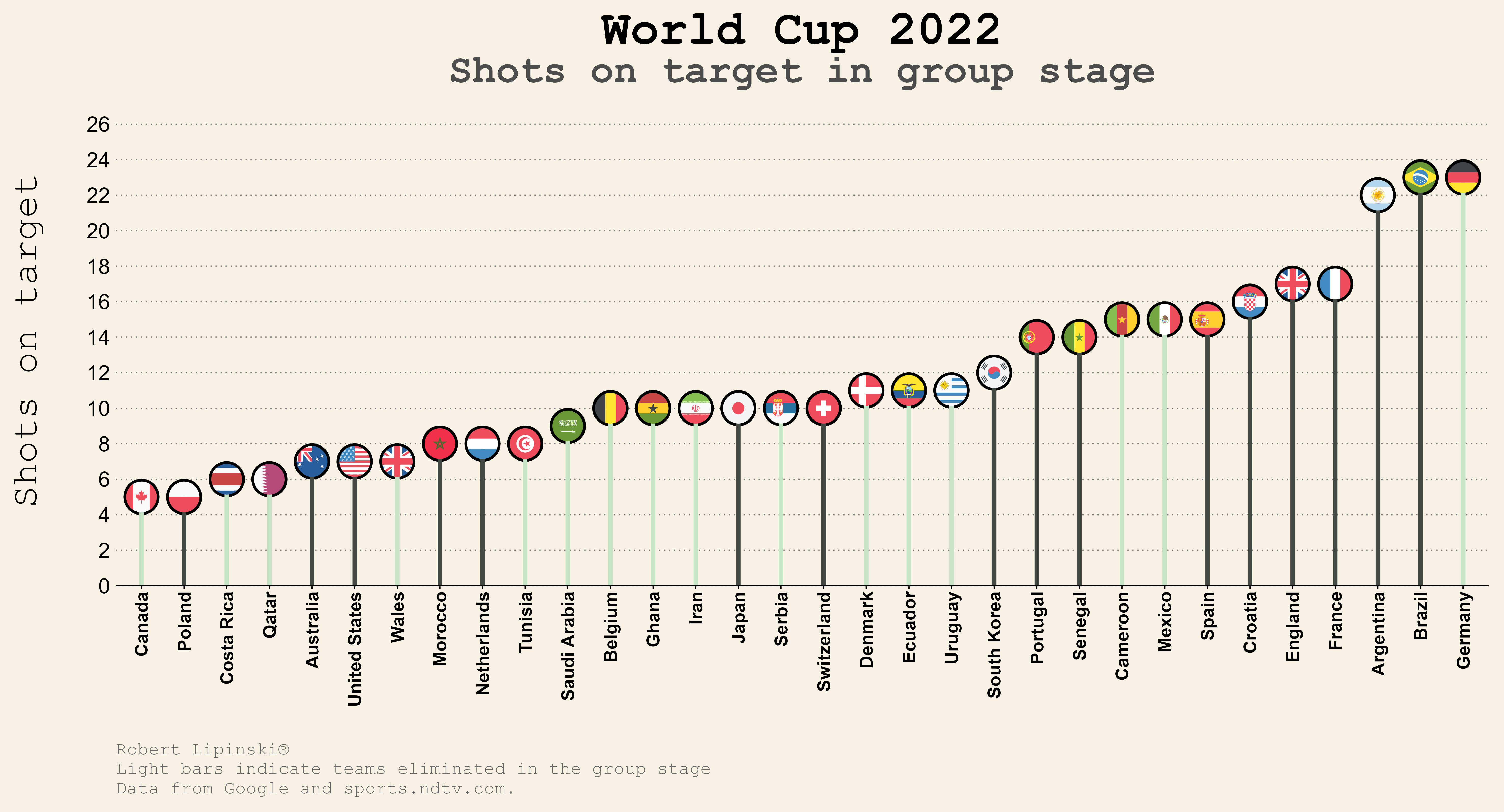
The dissappointing performance of my national team got me thinking whether they were just unlucky (i.e. creating a lot of chances with the ball just not wanting to land in the net) or rather they were just without a form. Comparing the shots on target, Poland didn't even come close the the average-performing team, so its quick elimination from the tournament was not just a score of bad luck

Measures: Goals in the group stage

Coverage: Male World Cup 2022 football teams

Data: Google and sports.ndtv.com


World Bank, in its own words

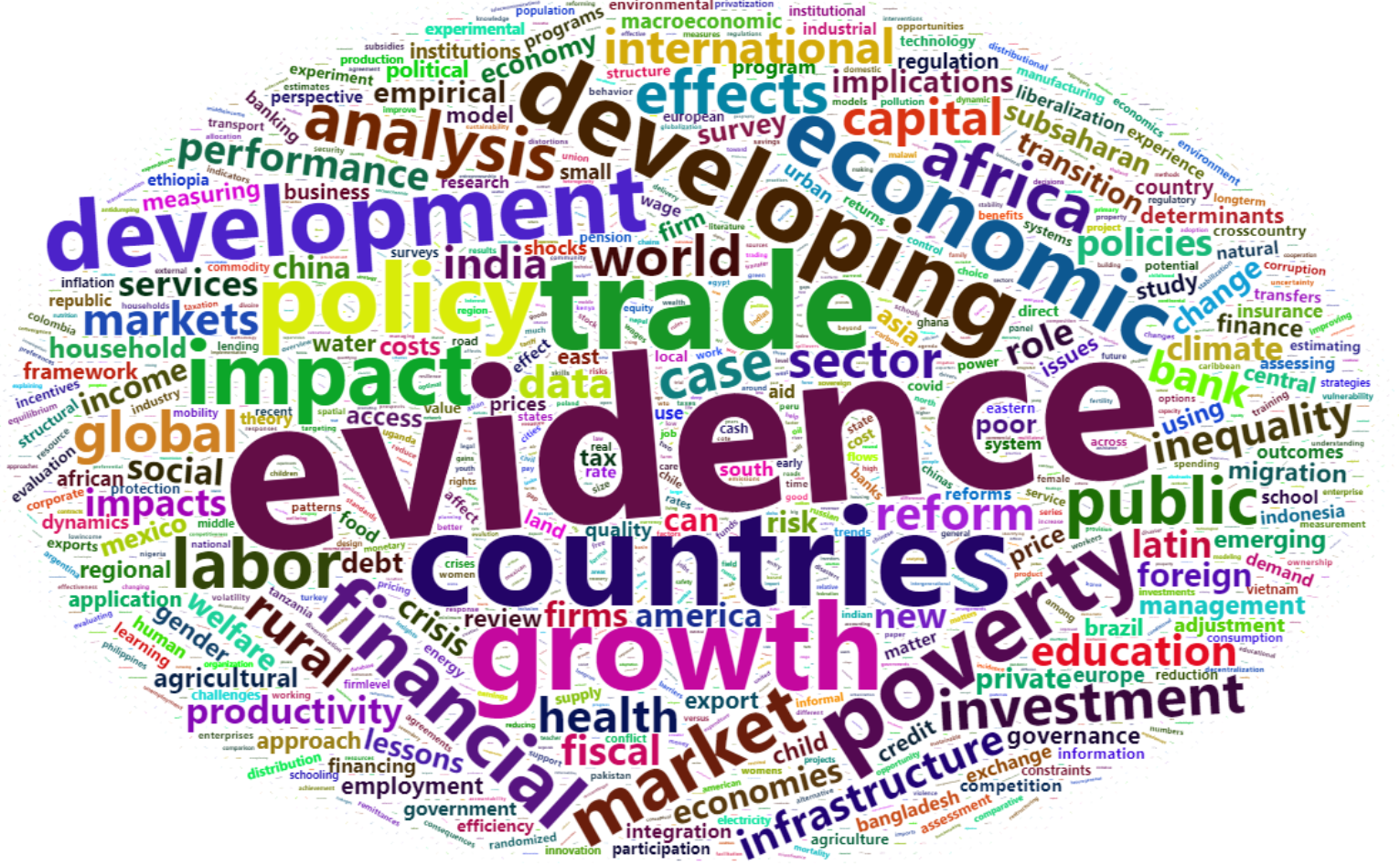
World Bank publishes multiple papers across various domains, mostly concerned not (as some people might assume) finances and loans, but rather development and poverty. The world cloud shows that in fact the most common word used in the titles of World Bank working papers is "evidence", hinting at the turn towards empirical-based assessments of efficiency of its policies and programmes

Measures: Word frequency

Coverage: Titles of World Bank working papers available online (9,126 at the time of figure creation)

Data: World Bank

In mid-2024 there were some 'shocking' news headlines about many World Bank reports not being read by almost anyone, yet the full picture is a bit more complicated


Speak of the devil? Wolf? Or maybe a troll? (first mapping take)

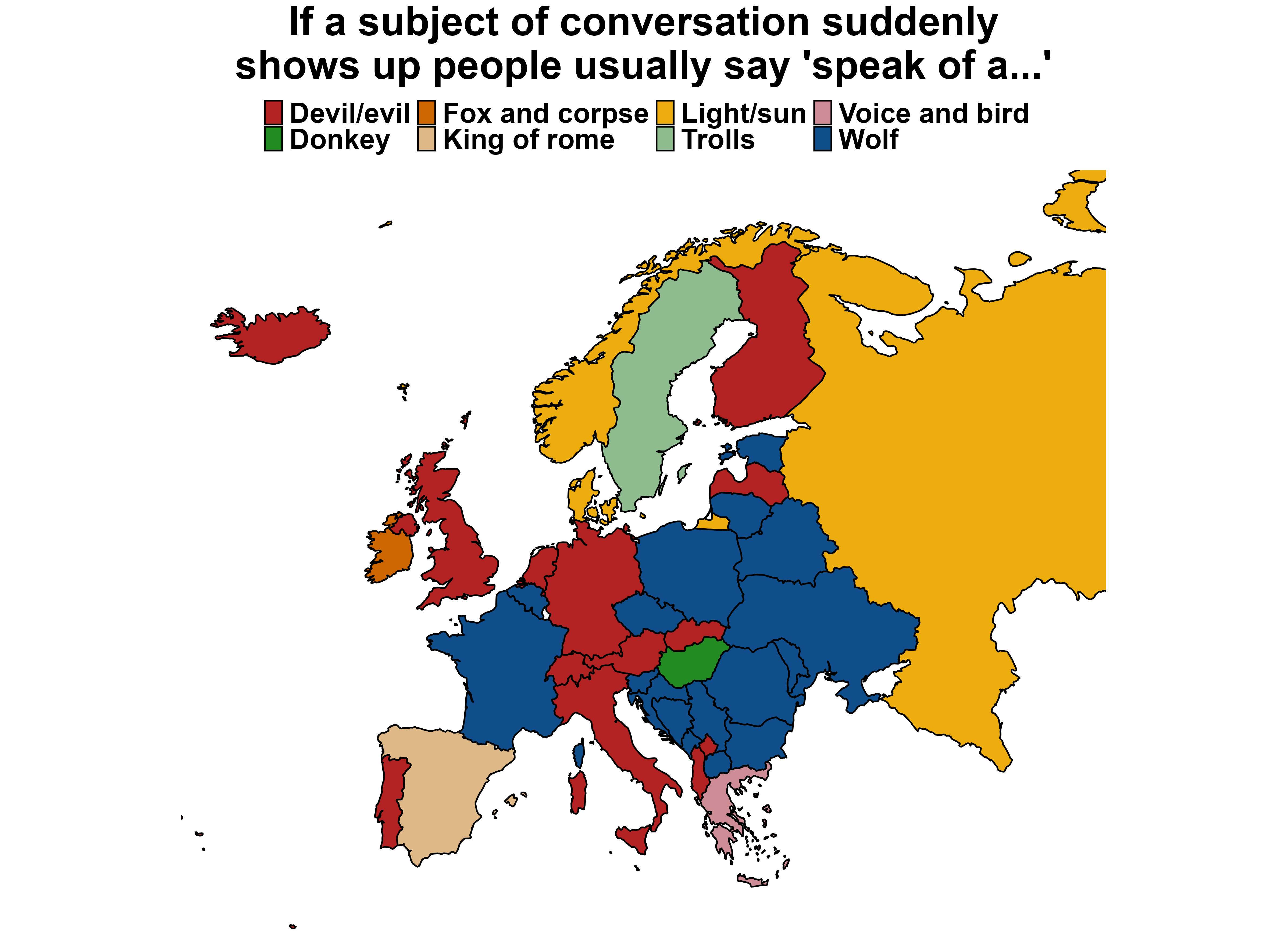
In this first map of mine I explore what do Europeans say when the subject of conversation suddenly walks in. As a native Pole I learned that in such situation one speaks of the 'wolf', which I soon discovered is exchanged for 'devil' in English. But when learning Spanish I found out Iberians actually say 'hablando del rey de Roma' so they 'talk about the king of Rome'. Since 3 languages I know in any detail all use a different persona in the same saying, I've decided to map it for all of Europe. The results were even more diverse, yet the devil and the wolf are in the lead.

Measures: Subject completing the phrase in a saying "speak of..." used in a situation where the subject of a conversation suddenly walks in

Coverage: European countries

Data: Wikipedia + national sources


Photos

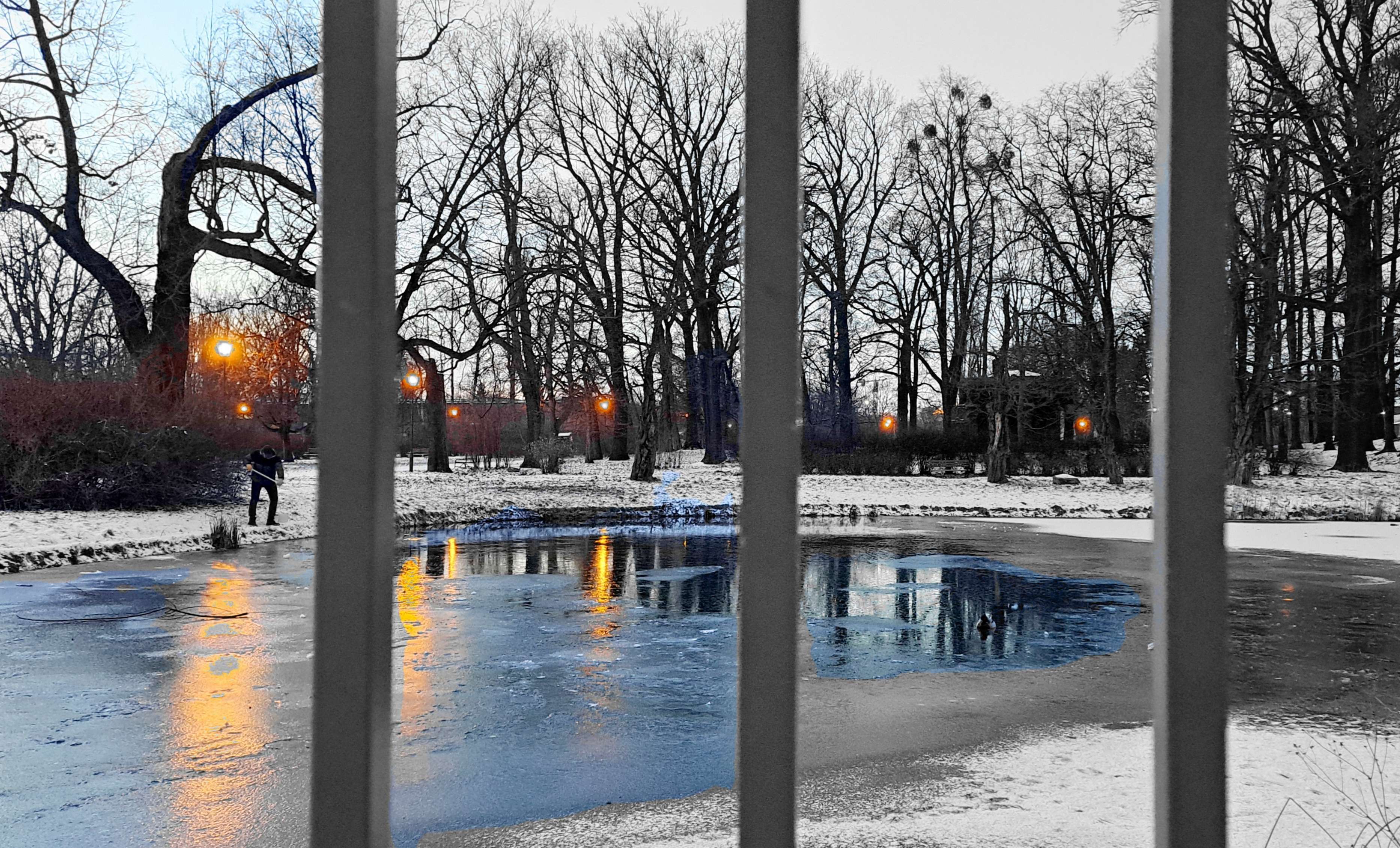
Setting of the color

Poland, January 2025


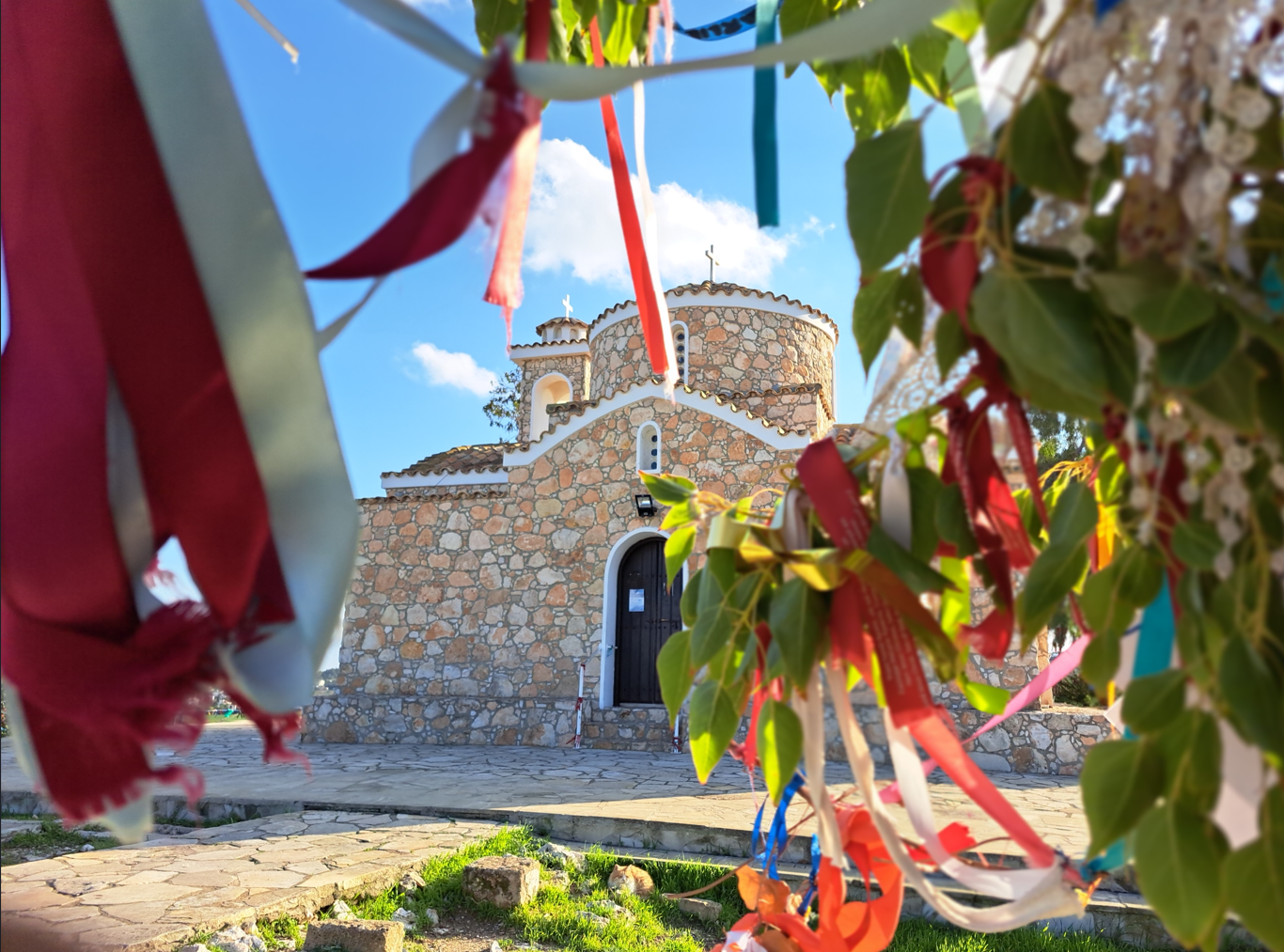
Color of the prayer

Profitis Ilias Church, Protaras, Cyprus, December 2024


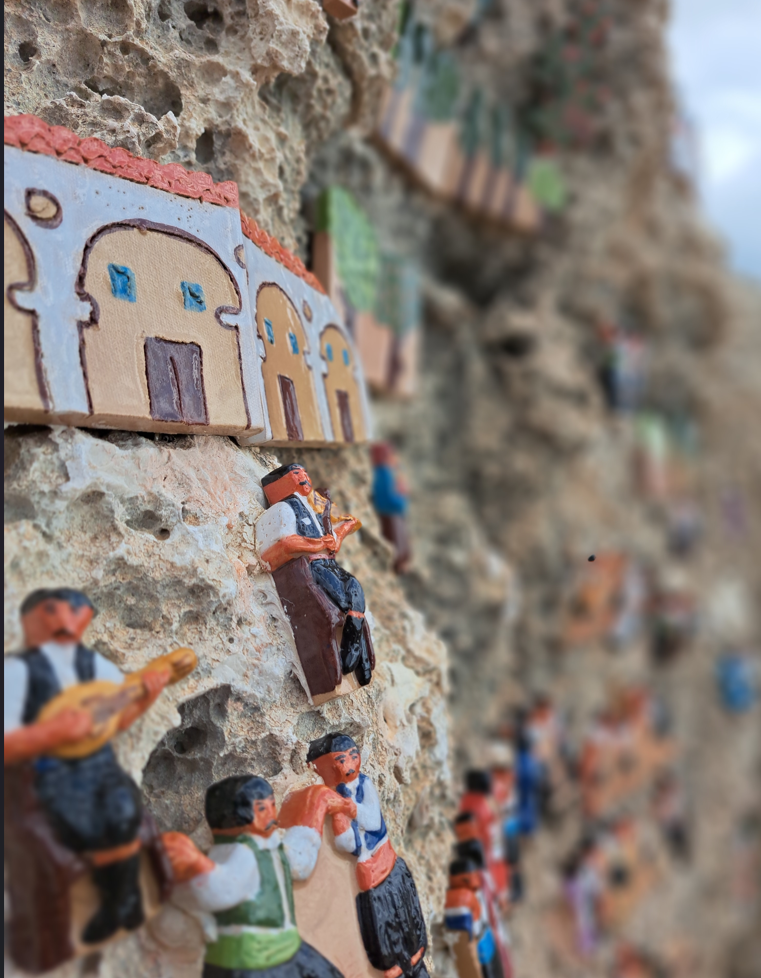
History in stone

Cyprus, December 2024

Step in color

Milan, Italy, May 2024

Border made by presence

Ostrołęka, Poland, September 2024

Nature's tentacles

Ostrołęka, Poland, April 2024

Hope

Somewhere in Poland, April 2024

Autumn

Lincoln College, Oxford, United Kingdom, October 2023

Louvre unhinged

Paris, France, March 2024

Deep focus

Washington DC, U.S., August 2022